If you’ve ever seen someone say “let’s true up later” or “we need to true up” in a message, you might have paused for a second wondering what it actually means.
You’re not alone.
In today’s fast-paced digital communication world, new phrases and slang pop up constant and “true up” is one of those phrases that’s quietly become more common in texts, work chats, and even social media.
Understanding modern chat language isn’t just about staying trendy nit helps you communicate clearly, avoid misunderstandings, and sound more natural in both casual and professional conversations.
In this guide, we’ll break down the true up meaning, how to use it correctly, real-life examples, common mistakes, and related slang.
Everything is updated for 2026, so you’re getting the most relevant usage.
🧠 What Does “True Up” Mean? (Definition & Origin)
✅ Simple Definition
“True up” means:
To make things accurate, balanced, or settled.
It’s often used when:
- Fixing numbers or accounts
- Correcting differences
- Aligning understanding between people
- Settling something that’s slightly “off”
📌 In Plain English:
Think of it as saying:
- “Let’s fix this”
- “Let’s make things right”
- “Let’s align everything properly”
📜 Origin of “True Up”
The phrase originally comes from finance and accounting. Businesses use “true up” when they adjust figures to reflect the correct final amount.
For example:
- If estimates were made earlier, they later “true up” the numbers with actual data.
Over time, this phrase moved into:
- Workplace communication (Slack, emails)
- Casual texting
- Online discussions
Now in 2026, it’s widely used even outside finance.
💬 How to Use “True Up” in Texts or Chat
📱 Common Contexts
You’ll most often see true up in:
- Work chats (Slack, Teams, email)
- Group conversations
- Freelance or project discussions
- Money-related chats
- Planning or coordination texts
✍️ Basic Usage Structure
Here are simple ways to use it:
- “Let’s true up later.”
- “We need to true up the numbers.”
- “Can we true up on this?”
- “I’ll true up everything tonight.”
🔑 What It Implies
When someone says “true up”, they usually mean:
- There’s a small mismatch or confusion
- Things aren’t finalized yet
- A correction or adjustment is needed
🗨️ Examples of “True Up” in Conversations
👨💼 Work Chat Example
Manager:
“We estimated the budget last week.”
Team Member:
“Got it, we’ll true up once we have final numbers.”
👉 Meaning: They’ll adjust the budget later.
💸 Money Example (Friends)
Friend 1:
“I paid for dinner, you sent me 500 already.”
Friend 2:
“Cool, we’ll true up later.”
👉 Meaning: They’ll settle the remaining amount later.
📊 Project Example
“Let’s true up our progress before the meeting tomorrow.”
👉 Meaning: Align updates and make sure everything is accurate.
😂 Casual/Funny Example
“I told my mom I’d clean my room… we’ll true up that promise later 😅”
👉 Meaning: Delaying responsibility (relatable!)
💬 Online Chat Example (2026 style)
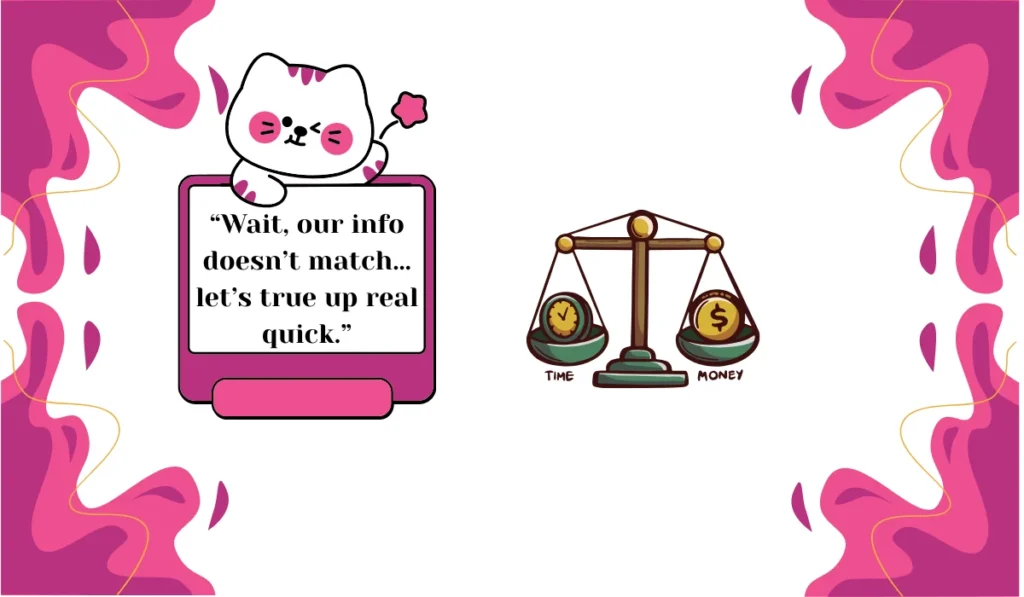
- “Wait, our info doesn’t match… let’s true up real quick.”
- “We’ll true up after the stream ends.”
- “Bro, we need to true up that score 😂”
⚠️ Common Mistakes or Misunderstandings
Even though true up sounds simple, people often misuse it.
❌ Mistake 1: Using It Like “Catch Up”
🚫 Incorrect:
“Let’s true up this weekend” (meaning hang out)
✅ Correct:
“Let’s catch up this weekend”
👉 True up is about fixing/alignment, not socializing.
❌ Mistake 2: Using It Without Context
🚫 “We’ll true up.”
(This sounds vague)
✅ Better:
“We’ll true up the expenses later.”
👉 Always clarify what you’re fixing.
❌ Mistake 3: Overusing in Casual Chats
While it’s becoming more common, it still sounds slightly professional.
Instead of:
- “Let’s true up our plans”
You might say:
- “Let’s sort it out”
- “Let’s fix it”
❌ Mistake 4: Confusing It With “Level Up”
- True up = fix or adjust
- Level up = improve or upgrade
Totally different meanings.
🔗 Related Slangs or Abbreviations
Here are similar phrases you might see alongside true up:
📌 1. “Settle Up”
- Meaning: Pay what you owe
- Example: “Let’s settle up after dinner”
👉 Very close to “true up” (especially for money)
📌 2. “Sync Up”
- Meaning: Align or coordinate
- Example: “Let’s sync up tomorrow”
👉 More about communication than correction
📌 3. “Fix It”
- Meaning: Correct something
- Example: “I’ll fix it later”
👉 Simpler version of “true up”
📌 4. “Balance Out”
- Meaning: Make equal
- Example: “We need to balance out the totals”
📌 5. “Reconcile”
- Meaning: Match records (formal)
- Example: “We need to reconcile accounts”
👉 This is the formal/business version of “true up”
🔗 Internal Linking Suggestions (for your blog)
You can link this article to:
- “BRB Meaning in Text”
- “IMO Meaning Explained”
- “DM Meaning in Social Media”
- “AFK Meaning in Gaming”
- “Bet Meaning Slang”
🌍 When Should You Use “True Up”?
✔️ Best Situations
Use true up when:
- You’re fixing numbers or payments
- You need to align information
- Something is slightly off
- You’re planning to adjust later
❌ Avoid Using It When:
- You mean hanging out (use “catch up”)
- You want to sound casual or playful
- You’re chatting with someone unfamiliar with business terms
💡 Pro Tip
In 2026, “true up” is trending more in hybrid work culture, where casual + professional language blends together.
So it’s perfectly fine in:
- Slack messages
- Remote work chats
- Freelance conversations
📊 Why “True Up” Is Trending in 2026
Here’s why this phrase is gaining popularity:
- 📈 Remote work increased usage
- 💬 Slack/Teams culture normalized business slang
- 🧑💻 Freelancers use it in global communication
- 🧠 It’s short, efficient, and clear
People prefer quick phrases and true up fits perfectly.
❓ FAQs
1. What does “true up” mean in texting?
It means to fix, adjust, or make something accurate or balanced.
2. Is “true up” formal or casual?
It’s semi-formal commonly used in work chats but now appearing in casual texts too.
3. Can I use “true up” with friends?
Yes, especially when talking about money or plans, but it may sound slightly professional.
4. Is “true up” the same as “settle up”?
They are similar, but:
- Settle up = pay money
- True up = adjust or fix (broader meaning)
5. Where did “true up” come from?
It originated in accounting and finance, where it means correcting figures.
6. Is “true up” commonly used in 2026?
Yes! It’s increasingly popular in:
- Remote work
- Freelancing
- Online chats
7. Can “true up” be used in emails?
Absolutely. It’s very common in professional emails and messages.
8. What’s a simple synonym for “true up”?
You can use:
- Fix
- Adjust
- Align
- Settle
🧾 Conclusion
So, what’s the final takeaway on true up meaning?
At its core, “true up” means making things right whether that’s numbers, plans, or understanding.
It started as a technical accounting term but has evolved into a versatile phrase used in both professional and casual conversations.
In today’s digital world especially in 2026 communication is all about clarity and efficiency.
That’s exactly why phrases like true up are gaining traction.
They’re short, practical, and easy to use once you understand them.
If you remember one thing:
Use “true up” when something needs to be fixed, balanced, or aligned.
💬 Now it’s your turn!
Have you used “true up” in a funny or unexpected way? Share your favorite text abbreviations in the comments and keep the conversation going!