From texting friends to scrolling through social media or reading news online, you often see terms that look confusing at first glance.
One such term is FOIA meaning, which many people search because they are unsure whether it is slang, legal jargon, or a chat abbreviation.
Interestingly, understanding FOIA meaning is important not just for casual curiosity but also for real-world situations involving government information, transparency, and official requests.
Therefore, in this guide (updated for 2026), we will break it down in a simple, human, and practical way so you never feel lost when you come across it again.
What Does FOIA Meaning Actually Stand For? (Definition & Origin)
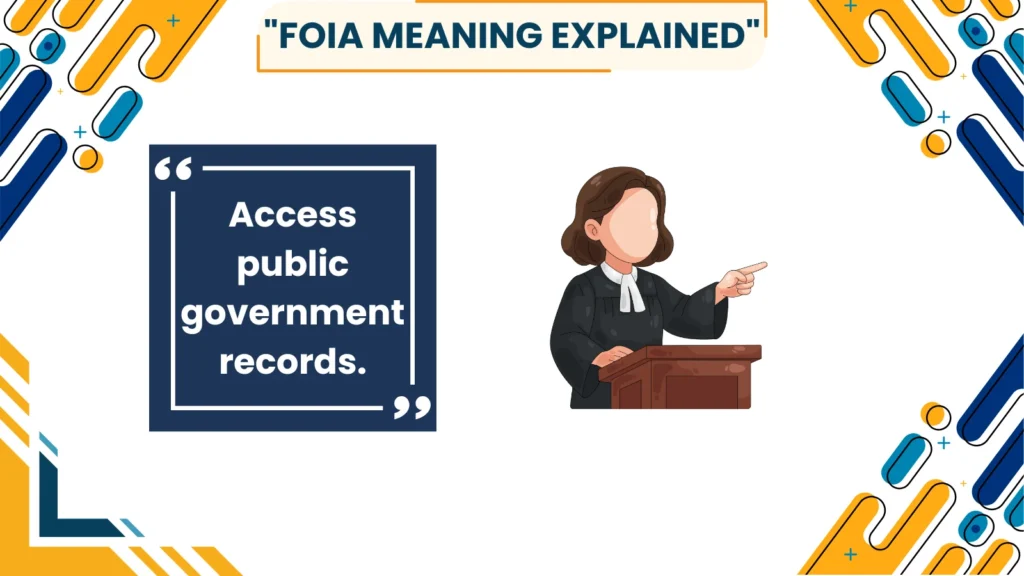
To begin with, FOIA meaning stands for Freedom of Information Act.
This is not a random internet slang or texting shortcut. Instead, it is a formal legal term used mainly in the United States and some other countries with similar transparency laws.
So, what exactly is FOIA?
In simple words, FOIA is a law that allows the public to request information from government agencies. In other words, it gives ordinary people the right to access certain official records.
For example:
- Government reports
- Public spending documents
- Emails from public officials (in some cases)
- Policy-related records
However, it is important to note that not everything is available. Some information is protected for security, privacy, or legal reasons.
Origin of FOIA
Moving forward, FOIA was originally passed in 1966 in the United States. Since then, it has become a key part of democratic transparency. Over time, similar laws have been adopted in other countries as well.
Because of this, FOIA is widely recognized in journalism, legal research, and public accountability discussions.
Is FOIA a Slang or Chat Abbreviation?
At first glance, many people think FOIA meaning might be some kind of texting slang. However, that is a common misunderstanding.
To clarify:
- FOIA is not Gen Z slang
- It is not a social media abbreviation
- It is not used in casual texting like LOL or BRB
Instead, FOIA is a formal acronym used in legal, governmental, and journalistic contexts.
Nevertheless, you might still see it online in conversations like:
- News discussions on Twitter (X)
- Reddit threads about government transparency
- Legal or investigative journalism posts
So, while it may appear in digital conversations, it is not part of everyday chat slang.
How FOIA Is Used in Real Life (Practical Explanation)
Now that you understand the definition, let’s move further and explore how FOIA is actually used in real life.
1. Journalists Using FOIA Requests
To begin with, journalists frequently use FOIA requests to uncover hidden or official information.
For example:
- Investigating government spending
- Accessing public contracts
- Reviewing internal communications of public agencies
2. Citizens Requesting Information
Additionally, regular citizens also use FOIA to request information.
For instance:
- Asking about public infrastructure projects
- Checking government decisions
- Accessing environmental reports
3. Researchers and Legal Experts
Moreover, researchers often rely on FOIA to gather verified data for studies, especially in politics, history, and social sciences.
How to Use FOIA in Texts, Chats, or Online Conversations
Even though FOIA is not a slang term, it can still appear in online discussions or messages, especially when talking about news or investigations.
Here’s how it may appear in modern digital communication:
Examples in Chat or Online Posts
- “I think I’ll submit a FOIA request to get the full report.”
- “This information came out through FOIA documents.”
- “We might need FOIA data to confirm this claim.”
In Social Media Context
On platforms like Twitter (X), Reddit, or Facebook, you may see:
- “FOIA just revealed some interesting emails…”
- “This was uncovered via FOIA request.”
Therefore, while it is not casual slang, it is still commonly used in digital discussions involving transparency or investigations.
Examples of FOIA Meaning in Conversations (Realistic Scenarios)
To make it even clearer, let’s look at some realistic conversation examples:
Example 1: News Discussion
Person A: How did they get this government data?
Person B: It was released through a FOIA request.
Example 2: Student Research
Student: I need official documents for my project.
Teacher: You might find them through FOIA records.
Example 3: Online Debate
User 1: Is this information confirmed?
User 2: Yes, it came from FOIA filings.
As you can see, FOIA is mostly used in serious or informational conversations rather than casual texting.
Common Mistakes or Misunderstandings About FOIA Meaning
Even though FOIA is simple once explained, many people still misunderstand it.
Mistake 1: Thinking It Is Slang
First of all, many users assume FOIA is a chat abbreviation like “FOMO” or “IMO.” However, it is strictly legal terminology.
Mistake 2: Believing Everything Is Public
Secondly, people often think FOIA gives access to all government information. In reality:
- Some data is restricted
- National security information is protected
- Personal privacy is safeguarded
Mistake 3: Confusing It With Internet Trends
Finally, FOIA is sometimes mistakenly treated like a trending internet phrase. However, it has been around for decades and is not a viral slang term.
Related Slang and Similar Abbreviations
Although FOIA itself is not slang, it often appears alongside other abbreviations in discussions.
Here are some related terms you may encounter:
- CIA – Central Intelligence Agency
- FBI – Federal Bureau of Investigation
- NSA – National Security Agency
- RTI – Right to Information (used in India and other countries)
- DOJ – Department of Justice
Additionally, in texting culture, people often confuse FOIA with abbreviations like:
- LOL
- BRB
- IMO
- TBH
However, these belong to casual chat language, unlike FOIA.
Why FOIA Still Matters in 2026
Even in 2026, FOIA remains extremely important because transparency and access to information are more valuable than ever.
Moreover, in an age of misinformation, FOIA helps:
- Verify facts
- Support journalism
- Increase government accountability
- Strengthen public trust
Therefore, understanding FOIA meaning is not just academic—it is practical and relevant.
SEO Insight: Why People Search FOIA Meaning
Interestingly, many users search for “FOIA meaning” because:
- They see it in news articles
- They encounter it on social media
- They assume it is slang
- They want simple explanation
So, this guide helps bridge that gap between confusion and clarity.
Frequently Asked Questions (FAQs)
1. What does FOIA mean in texting?
FOIA does not have a texting meaning. It stands for Freedom of Information Act.
2. Is FOIA a slang word?
No, FOIA is not slang. It is a legal acronym used in government transparency laws.
3. Why do people use FOIA online?
People use FOIA online when discussing government documents, investigations, or news leaks.
4. Can anyone file a FOIA request?
Yes, in many countries like the US, any citizen can file a FOIA request.
5. Is FOIA used on social media?
Yes, especially in news discussions, journalism posts, and political debates.
6. What kind of information can FOIA reveal?
It can reveal government records, reports, and official communications, but not sensitive or classified data.
7. Is FOIA the same in every country?
No, different countries have similar laws, but rules and access levels vary.
8. Why is FOIA important?
It ensures transparency, accountability, and public access to government information.
Conclusion:
To summarize, FOIA meaning stands for the Freedom of Information Act, a powerful law that allows people to access government information.
Although it is sometimes mistaken for slang, it is actually a formal legal term used in journalism, research, and public transparency.
“In addition, FOIA continues to play a major role in 2026 by keeping governments accountable and ensuring citizens maintain their fundamental right to know important information.”