If you spend time on social media, gaming chats, Reddit threads, TikTok comments, or texting apps, you’ve probably come across the word “derision.”
While it’s not a modern slang abbreviation like “LOL” or “FR,” it’s a powerful word that appears often in online conversations, memes, arguments, and sarcastic posts.
Understanding the derision meaning can help you avoid confusion and better understand the tone behind comments online.
In internet culture, tone matters a lot.
Someone may sound joking, critical, sarcastic, or outright disrespectful and derision usually falls into the mocking category.
In this updated 2026 guide, you’ll learn:
- What derision means
- How people use it in texting and chats
- Real conversation examples
- Common misunderstandings
- Similar slang words and expressions
- FAQs and practical usage tips
Let’s break it down in simple language.
What Does “Derision” Mean?
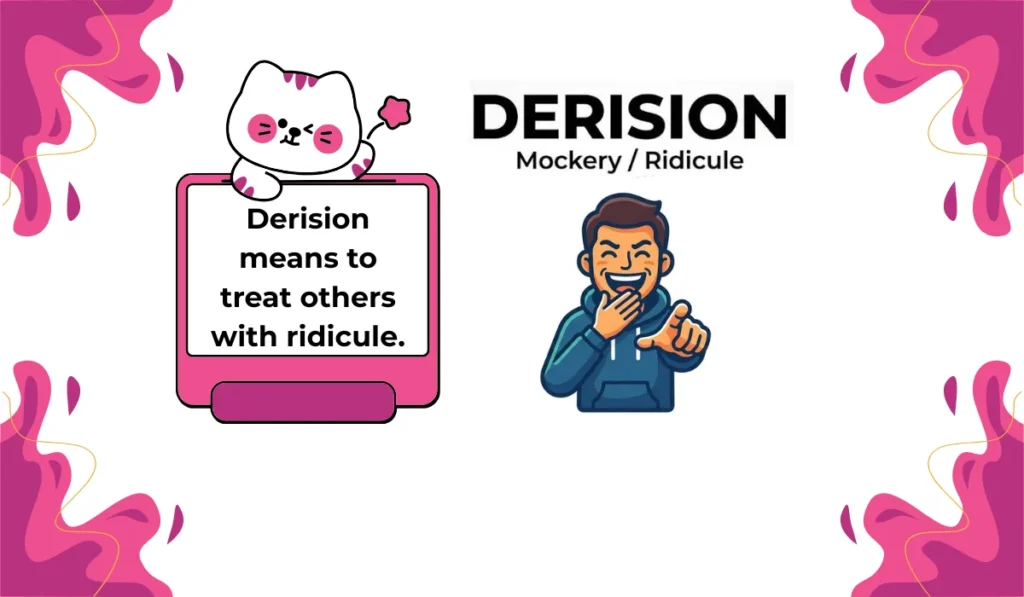
Derision means mockery, ridicule, or expressing contempt toward someone or something.
When someone speaks with derision, they are usually:
- Making fun of someone
- Speaking sarcastically in a hurtful way
- Treating something like a joke
- Showing disrespect or scorn
Simple Definition
Derision = mocking someone in a disrespectful or insulting way
It’s often used to describe a tone, reaction, or attitude.
Origin of the Word
The word comes from the Latin word deridere, which means “to laugh at” or “to mock.”
Although it’s an older English word, it’s still widely used online today, especially in:
- Twitter/X debates
- Reddit discussions
- TikTok comment sections
- Gaming communities
- Political conversations
- Reaction videos
Why “Derision” Matters in Online Culture
Online communication doesn’t include facial expressions or voice tone. Because of that, words become extremely important.
A comment filled with derision can:
- Start arguments
- Hurt feelings
- Create drama
- Make conversations toxic
For example:
“Everyone reacted with derision when he said pineapple belongs on pizza.”
This means people mocked or laughed at the opinion instead of taking it seriously.
In internet culture, derision often appears through:
- Sarcastic memes
- Mocking GIFs
- Passive-aggressive comments
- Roast culture
- Cancel culture reactions
How to Pronounce Derision
Pronunciation:
di-RIZH-un
Phonetic spelling:
dih-RIZH-uhn
Many people mispronounce it as “deh-ree-zee-on,” but the correct pronunciation sounds smoother.
How to Use “Derision” in Texts or Chat
The word is mostly used in:
- Formal conversations
- Social media commentary
- Discussions about behavior or tone
It’s less common in casual texting between friends but still appears online frequently.
Common Usage Patterns
1. “With derision”
Used to describe how someone reacted.
Examples:
- “She laughed with derision.”
- “The comments were filled with derision.”
2. “Subject of derision”
Used when someone becomes the target of mockery.
Examples:
- “His old tweets became a subject of derision online.”
- “The failed update faced widespread derision.”
3. “Tone of derision”
Used when someone sounds mocking or contemptuous.
Examples:
- “I didn’t like his tone of derision.”
- “Her voice carried obvious derision.”
Examples of Derision in Conversations
Here are realistic examples you might see online or in text messages.
Example 1: Gaming Chat
Player 1: “I think this weapon is actually balanced.”
Player 2: “LOL okay sure 💀”
This response may carry derision because Player 2 is mocking the opinion.
Example 2: TikTok Comments
“The singer’s new outfit was met with derision in the comments.”
Meaning:
People mocked the outfit instead of praising it.
Example 3: Group Chat
Friend 1: “I still use Internet Explorer sometimes.”
Friend 2: “Bro living in 2009 😭”
This playful teasing contains mild derision.
Example 4: Reddit Debate
“Users responded with derision after the company increased prices again.”
Translation:
People reacted negatively and mockingly.
Example 5: Workplace Chat
Coworker: “Maybe we should print every email.”
Others: “Yeah… because paper shortages aren’t real.”
The sarcastic response shows derision.
Is Derision Always Negative?
Usually, yes.
Derision almost always includes:
- Mocking
- Belittling
- Disrespect
- Harsh sarcasm
However, context matters.
Friendly Derision
Sometimes close friends jokingly mock each other in a playful way.
Example:
“My friends reacted with derision when I said I still watch cartoons.”
This could simply mean playful teasing.
Harmful Derision
In toxic online spaces, derision can become:
- Bullying
- Harassment
- Public humiliation
That’s why understanding tone is important in digital communication.
Derision vs Similar Words
Many people confuse derision with similar expressions. Here’s a quick comparison.
| Word | Meaning | Tone |
|---|---|---|
| Derision | Mocking with contempt | Harsh |
| Sarcasm | Saying the opposite humorously | Can be playful |
| Ridicule | Making fun of someone publicly | Negative |
| Mockery | Imitating to insult | Negative |
| Teasing | Light joking | Usually friendly |
| Roasting | Humorous insults | Playful or harsh |
Quick Tip
If the comment feels:
- Mean-spirited
- Dismissive
- Contemptuous
…it likely involves derision.
Common Mistakes or Misunderstandings
1. Thinking It Means “Funny”
Not all jokes are derision.
A joke becomes derision when it’s intended to mock or belittle someone.
2. Confusing It With Criticism
Criticism can be constructive.
Derision is usually disrespectful and mocking.
Example:
- Criticism: “This design could be improved.”
- Derision: “Who designed this garbage? 😂”
3. Assuming It’s Internet Slang
Unlike abbreviations such as:
- LOL
- BRB
- IMO
- TBH
Derision is a standard English vocabulary word, not a slang acronym.
However, it’s commonly used in online culture discussions.
4. Overusing It
Some people use “derision” to describe any disagreement.
That’s incorrect.
Disagreement becomes derision only when mockery or contempt is involved.
Real-Life Online Scenarios Where Derision Appears
Social Media Pile-Ons
When influencers post controversial takes, comments often become filled with derision.
Example:
“The brand announcement was met with immediate derision on X.”
Meme Culture
Memes frequently use humor mixed with derision.
Examples include:
- “Nobody asked”
- “Bro thought he cooked”
- “Delete this 💀”
These phrases often mock someone publicly.
Gaming Communities
Competitive games sometimes create highly sarcastic environments.
Common derisive comments:
- “Skill issue.”
- “Imagine losing that.”
- “Uninstall the game.”
Sports Discussions
Fans use derision heavily after bad performances.
Example:
“The coach faced derision after the team lost again.”
How to Respond to Derision Online
If someone mocks you online, you don’t always need to react emotionally.
Here are smarter responses:
Ignore It
Sometimes silence is best.
Respond Calmly
Avoid escalating arguments.
Example:
“We can disagree without mocking each other.”
Use Humor Carefully
A lighthearted reply can diffuse tension.
Block or Mute Toxic Users
Protect your mental space online.
Related Slangs and Abbreviations
If you’re learning internet language, here are related terms often connected with derision.
“Roast”
A humorous insult.
Example:
“Twitter roasted the new logo.”
“Clowning”
Making fun of someone.
Example:
“Everyone was clowning him for the typo.”
“Savage”
A brutally funny insult.
Example:
“That comeback was savage.”
“Ratio”
When replies/mockery overpower a post online.
Example:
“He got ratioed instantly.”
“L Take”
A bad opinion.
Example:
“That’s an L take bro.”
“Skill Issue”
Gaming slang used mockingly.
Example:
“You lost again? Skill issue.”
Funny and Relatable Examples of Derision
Here are some internet-style examples people instantly recognize.
Example 1
Person: “I microwave ice cream to soften it.”
Internet: “Straight to jail.”
Example 2
Friend: “I’ve never watched a single Marvel movie.”
Group Chat: “Bro lives under a rock 💀”
Example 3
Tweet: “Mondays are actually fun.”
Comments: “Nice try corporate account.”
These reactions all contain mild derision.
When NOT to Use the Word “Derision”
Avoid using it:
- In extremely casual chats where simpler words work better
- When there’s no actual mockery involved
- To exaggerate harmless disagreements
Instead, use simpler words like:
- teasing
- joking
- criticism
- sarcasm
depending on context.
SEO Tip: Why People Search “Derision Meaning”
People usually search “derision meaning” because they:
- Saw it in a comment section
- Read it in a news article
- Heard it in a YouTube video
- Encountered it during an online argument
- Want to understand tone in communication
As online conversations become more nuanced in 2026, understanding emotional language is more useful than ever.
Suggested Internal Linking Ideas
If you run a slang or texting blog, link this article to related topics such as:
- “What Does Savage Mean in Text?”
- “L Take Meaning Explained”
- “Ratio Meaning on Twitter/X”
- “What Does Mockery Mean?”
- “Sarcasm vs Irony”
- “Internet Roast Culture Explained”
These related topics improve SEO and user engagement.
FAQs
1. What does derision mean in simple words?
Derision means mocking or making fun of someone in a disrespectful way.
2. Is derision a slang word?
No. Derision is a standard English vocabulary word, but it’s commonly used online and in social media discussions.
3. Can derision be playful?
Sometimes friends use playful derision while joking, but the word usually has a negative tone.
4. What is an example of derision?
Example:
“The audience reacted with derision after the awkward speech.”
This means people mocked the speech.
5. Is derision the same as sarcasm?
Not exactly. Sarcasm can be playful, while derision usually includes contempt or ridicule.
6. Where is the word derision commonly used?
You’ll often see it in:
- Social media
- News articles
- Reddit discussions
- Online debates
- Gaming communities
7. What’s the difference between criticism and derision?
Criticism gives feedback. Derision mocks or humiliates someone.
8. Why do people use derision online?
People use derision to:
- Express disapproval
- Mock bad opinions
- Join internet humor trends
- Participate in meme culture
Conclusion
Understanding the derision meaning helps you better recognize tone, sarcasm, and mockery in digital communication.
In today’s internet culture, words often carry emotional weight, and derision is one of the clearest examples of online contempt or ridicule.
Whether you see it in TikTok comments, gaming chats, Reddit arguments, or meme culture, derision usually signals that someone is being mocked rather than respectfully criticized.
Knowing the difference can help you navigate online conversations more confidently and avoid misunderstandings.
Updated for 2026, this guide reflects how language continues evolving across social media and texting culture. As internet communication becomes faster and more sarcastic, understanding terms like derision becomes increasingly valuable.
Share your favorite text abbreviation or internet slang term in the comments!