In many cases, they’re talking about affiliate marketing.
Understanding the affiliate marketing meaning is important because it has become one of the most popular ways individuals, bloggers, influencers, and businesses earn income online.
Whether you’re browsing social media, reading blogs, watching YouTube videos, or scrolling through online forums, you’ve probably encountered affiliate links without even realizing it.
In this guide, you’ll learn the complete affiliate marketing meaning, how it works, examples, common misconceptions, and how beginners can start using affiliate marketing successfully.
Updated for 2026, this article provides practical, easy-to-understand information that helps both newcomers and aspiring marketers.
What Does Affiliate Marketing Mean?
The affiliate marketing meaning is simple:
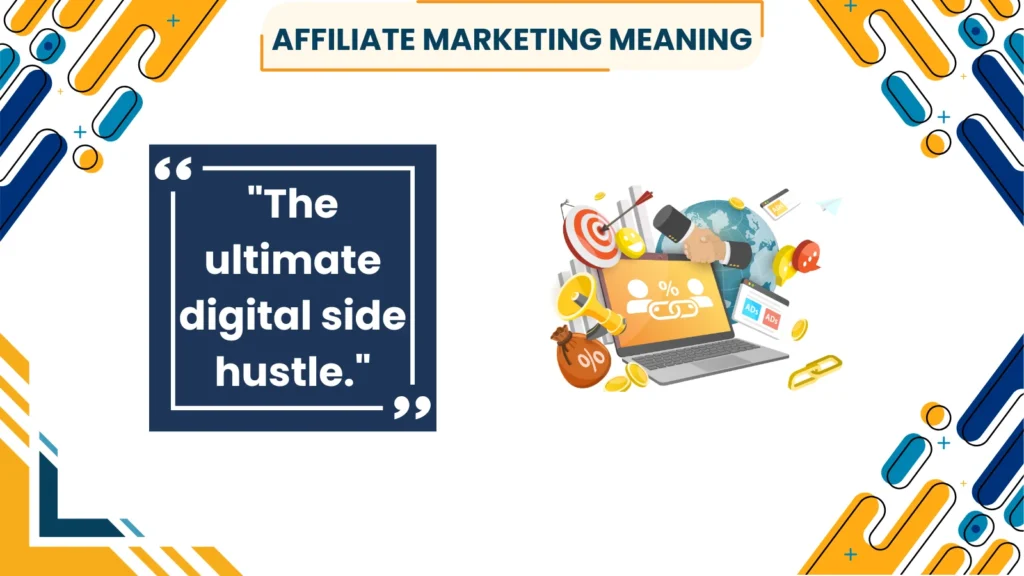
Affiliate marketing is a performance-based marketing model where a person earns a commission for promoting another company’s products or services.
In other words, affiliates recommend products to their audience using special tracking links. When someone clicks the link and makes a purchase, the affiliate earns a commission.
Simple Definition
Affiliate Marketing = Promoting Products + Referral Link + Commission
Think of it like recommending your favorite restaurant to a friend. If the restaurant paid you every time your friend visited because of your recommendation, that would be similar to affiliate marketing.
Origin of Affiliate Marketing
Affiliate marketing became popular in the late 1990s when online shopping started growing rapidly. One of the earliest well-known affiliate programs was launched by Amazon through its Associates Program.
Since then, affiliate marketing has evolved into a multi-billion-dollar industry involving:
- Bloggers
- YouTubers
- TikTok creators
- Instagram influencers
- Website owners
- Email marketers
- Content creators
Today, thousands of companies offer affiliate programs that allow people to earn money by promoting products online.
How Affiliate Marketing Works
To fully understand the affiliate marketing meaning, it’s important to know how the process works.
The Four Main Parties
- Merchant (Seller)
- Affiliate (Promoter)
- Customer (Buyer)
- Affiliate Network (Optional)
Step-by-Step Process
Step 1: Join an Affiliate Program
An affiliate signs up for a company’s affiliate program.
Step 2: Get a Unique Tracking Link
The company provides a unique referral link.
Example:
www.example.com/product?ref=affiliate123
Step 3: Promote the Product
The affiliate shares the link through:
- Blog posts
- YouTube videos
- Social media
- Email newsletters
- Online communities
Step 4: Customer Clicks the Link
A visitor clicks the affiliate link.
Step 5: Customer Makes a Purchase
The tracking system records the sale.
Step 6: Affiliate Earns a Commission
The company pays the affiliate a percentage of the sale.
Why Affiliate Marketing Is So Popular in 2026
Affiliate marketing continues growing because it benefits everyone involved.
💰 Benefits for Affiliates
- Low startup cost
- Flexible schedule
- Remote work opportunity
- Passive income potential
- No inventory management
🏢 Benefits for Businesses
- Pay only for results
- Wider audience reach
- Increased sales
- Cost-effective marketing
👥 Benefits for Customers
- Honest product recommendations
- Helpful reviews
- Product comparisons
- Special discounts and bonuses
How to Use Affiliate Marketing in Real Life
Understanding the affiliate marketing meaning becomes easier when looking at real-world examples.
Example 1: Technology Blogger
A blogger writes:
“I tested the best laptops for students. My favorite is Model X.”
They include an affiliate link.
If readers purchase the laptop through that link, the blogger earns a commission.
Example 2: YouTube Creator
A YouTuber reviews a camera and says:
“Check the link in the description.”
That link may be an affiliate link.
Example 3: Instagram Influencer
An influencer shares:
“This skincare product changed my routine.”
Followers click the affiliate link and make purchases.
The influencer earns a commission.
Examples of Affiliate Marketing Conversations
Example 1
Friend A: How do bloggers make money?
Friend B: Many use affiliate marketing. They earn commissions when people buy products through their links.
Example 2
User: Is that product recommendation sponsored?
Creator: No sponsorship, but it’s an affiliate link.
Example 3
User: What’s affiliate marketing?
Marketer: It’s earning money by promoting products and getting paid when someone buys through your referral link.
Common Types of Affiliate Marketing
Not all affiliate marketing works the same way.
Unattached Affiliate Marketing
The affiliate has little or no connection to the product.
Example:
Running paid ads for products you’ve never personally used.
Related Affiliate Marketing
The affiliate promotes products relevant to their niche.
Example:
A fitness blogger promoting workout equipment.
Involved Affiliate Marketing
The affiliate personally uses and recommends the product.
Example:
A photographer reviewing their favorite camera.
This approach often builds the most trust.
Common Mistakes and Misunderstandings
Many beginners misunderstand the affiliate marketing meaning.
Mistake #1: Thinking It’s a Get-Rich-Quick Scheme
Affiliate marketing requires:
- Consistent content
- Audience building
- Trust
- Patience
Success usually takes time.
Mistake #2: Promoting Everything
Promoting random products can hurt credibility.
Instead:
- Recommend useful products
- Focus on your niche
- Be honest
Mistake #3: Ignoring Disclosure Rules
Many countries require affiliates to disclose affiliate relationships.
Example:
“This article contains affiliate links. I may earn a commission at no extra cost to you.”
Mistake #4: Focusing Only on Sales
Building trust matters more than pushing products.
Helpful content often converts better than aggressive promotion.
Affiliate Marketing Terms You Should Know
If you’re researching the affiliate marketing meaning, you’ll frequently encounter these terms.
Affiliate Link
A special tracking URL used to record referrals.
Commission
The payment earned from successful referrals.
Conversion
When a visitor completes a desired action.
Cookie Duration
The period during which sales can be credited to the affiliate.
CPA (Cost Per Action)
Payment occurs when a specific action is completed.
EPC (Earnings Per Click)
Average earnings generated per click.
Related Marketing Terms and Concepts
These terms are often associated with affiliate marketing.
Digital Marketing
Promoting products and services online.
Influencer Marketing
Creators promote products to their followers.
Referral Marketing
Customers refer others and receive rewards.
Content Marketing
Creating valuable content to attract audiences.
Performance Marketing
Marketing campaigns focused on measurable results.
Affiliate Marketing on Social Media
In 2026, social platforms play a major role in affiliate marketing.
Popular platforms include:
- YouTube
- TikTok
- X (Twitter)
Recent Example
A creator posts:
“Top 5 gadgets I actually use every day.”
The post includes affiliate links to recommended products.
This type of content remains extremely popular because audiences appreciate practical recommendations.
Is Affiliate Marketing Legitimate?
Yes.
Affiliate marketing is a legitimate business model used by major brands worldwide.
Successful companies use affiliate programs because:
- They increase sales.
- They reach new audiences.
- They reward performance.
However, users should always research products before purchasing and avoid unrealistic income claims.
How Beginners Can Start Affiliate Marketing
If you’re interested in applying the affiliate marketing meaning in practice, follow these steps.
Step 1: Choose a Niche
Examples:
- Technology
- Fitness
- Travel
- Finance
- Gaming
- Education
Step 2: Create Content
Publish:
- Blog posts
- Reviews
- Tutorials
- Videos
- Guides
Step 3: Join Affiliate Programs
Look for reputable programs in your niche.
Step 4: Build Trust
Focus on helping readers solve problems.
Step 5: Optimize and Scale
Track performance and improve content over time.
Internal Linking Suggestions
For SEO purposes, consider linking to related articles:
- What Is Digital Marketing?
- Passive Income Meaning
- Influencer Marketing Explained
- CPA Marketing Meaning
- Content Marketing Guide
- Social Media Marketing Basics
- How Affiliate Links Work
- Best Affiliate Programs for Beginners
Frequently Asked Questions (FAQs)
1. What is the simple affiliate marketing meaning?
Affiliate marketing means earning commissions by promoting another company’s products or services through referral links.
2. Is affiliate marketing free to start?
Many affiliate programs are free to join, though building a website or creating content may involve costs.
3. Can beginners do affiliate marketing?
Yes. Many successful affiliates started with no prior experience.
4. How do affiliates get paid?
Affiliates earn commissions when users complete purchases or specific actions through referral links.
5. Is affiliate marketing legal?
Yes, affiliate marketing is legal when conducted transparently and according to applicable regulations.
6. How much money can affiliates earn?
Income varies widely based on niche, audience size, traffic, and marketing strategy.
7. Do I need a website for affiliate marketing?
No. Many affiliates use YouTube, TikTok, Instagram, email marketing, and other platforms.
8. Why is affiliate marketing popular in 2026?
It offers flexible earning opportunities, low startup costs, and scalable income potential.
Conclusion
Understanding the affiliate marketing meaning is essential for anyone interested in online business, digital marketing, or passive income opportunities.
Whether you’re a blogger, influencer, YouTuber, or complete beginner, affiliate marketing can become a valuable income stream when approached with honesty and consistency.
Updated for 2026, affiliate marketing remains one of the most accessible ways to earn online, but success depends on building trust, providing value, and recommending products that genuinely help your audience