If you’ve ever received a quick “mmk” in a chat and paused for a second wondering what that tone meant, you’re not alone.
In today’s fast-paced digital world, abbreviations like MMK are everywhere on WhatsApp, Snapchat, Discord, and even in professional Slack conversations.
Understanding these short forms isn’t just about decoding words it’s about reading tone, intent, and emotion.
In this guide, we’ll break down the mmk meaning, how to use it correctly, and when it might come off as friendly… or slightly passive-aggressive.
Yes, context matters a lot with this one.
What Does MMK Mean? (Definition & Origin)
Simple Definition of MMK
MMK is a casual shorthand for “mm, okay” or simply “okay.”
It’s often used to:
- Acknowledge something
- Show agreement (sometimes reluctant)
- End a conversation quickly
👉 Think of it as a more texting-style version of “okay,” but with a slightly different tone depending on context.
Where Did MMK Come From?
The abbreviation mmk comes from the spoken phrase “mm, okay,” where:
- “mm” = a thinking or acknowledging sound
- “okay” = agreement or confirmation
Over time, people started typing it as mmk to save time and match how it sounds in real life.
It gained popularity through:
- Early chatrooms (AOL, MSN Messenger)
- Online forums
- Social media platforms like Twitter/X, TikTok, and Discord
Today, mmk meaning in text can vary slightly depending on tone, making it one of those subtle but powerful slang terms.
How to Use MMK in Texts or Chat
When MMK Works Perfectly
You can use mmk in casual conversations when you want to:
- Acknowledge instructions
- Show mild agreement
- Respond quickly without overthinking
Examples:
- “Send me the file by 5.”
→ “mmk” - “We’re meeting at the café tomorrow.”
→ “mmk, got it”
Tone Matters: Friendly vs. Cold
Here’s where things get interesting.
MMK can feel different depending on context:
| Tone Type | Meaning |
|---|---|
| Friendly | “Okay, sounds good 👍” |
| Neutral | “Noted.” |
| Slightly annoyed | “Fine… whatever.” |
| Dismissive | “I don’t really care.” |
👉 This is why some people overthink when they receive “mmk” because it can feel a bit dry or blunt.
Best Situations to Use MMK
Use mmk when:
- Chatting with friends
- Replying quickly in casual conversations
- Confirming simple information
Avoid it when:
- Talking to your boss or client
- Handling serious discussions
- You want to sound warm or enthusiastic
Examples of MMK in Conversations
Let’s look at real-life style conversations so you can understand how mmk meaning in chat changes with tone.
1. Casual Agreement
Friend: “Let’s watch a movie tonight.”
You: “mmk, I’m in”
✔ Friendly and relaxed
2. Quick Acknowledgment
Boss: “Please update the report before 3 PM.”
You: “mmk”
⚠ Sounds a bit too casual better to say “Okay” or “Got it”
3. Slight Annoyance
Sibling: “Clean your room now.”
You: “mmk…”
😐 Feels reluctant or annoyed
4. Ending a Conversation
Friend: “Anyway, that’s what happened.”
You: “mmk”
✔ Signals conversation closure
5. Passive-Aggressive Vibe
Partner: “I forgot to call you.”
You: “mmk”
😬 This can feel cold or upset
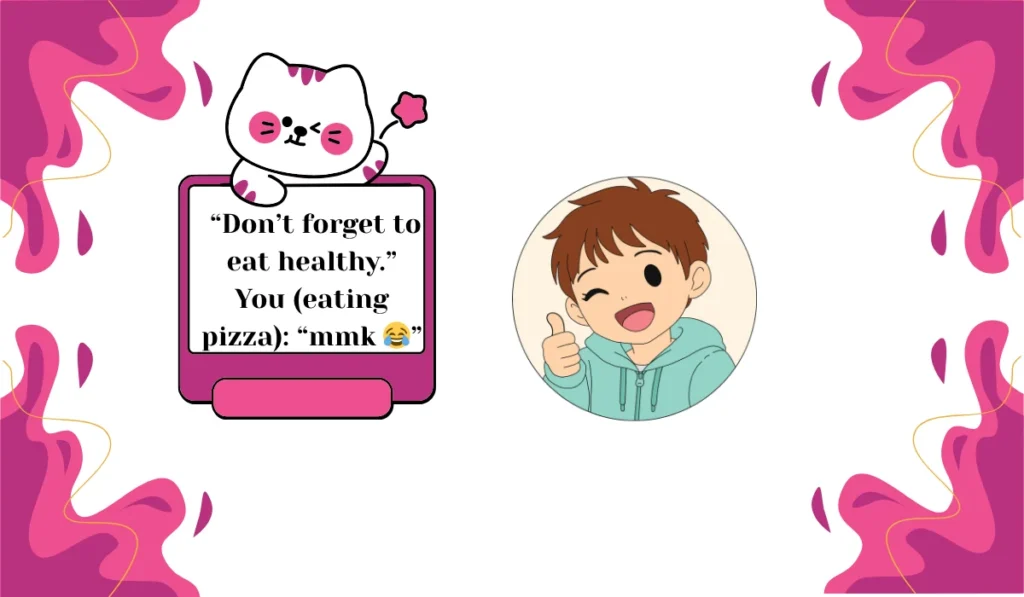
6. Funny/Relatable Scenario
Mom: “Don’t forget to eat healthy.”
You (eating pizza): “mmk 😂”
✔ Playful contradiction
Common Mistakes or Misunderstandings
Even though mmk meaning seems simple, people often misuse it.
❌ Mistake 1: Using MMK in Formal Chats
Avoid sending mmk in:
- Work emails
- Professional chats
- Academic communication
✔ Better alternatives:
- “Understood”
- “Noted”
- “Okay, I’ll do that”
❌ Mistake 2: Sounding Rude Without Intention
Sometimes, mmk can sound:
- Dismissive
- Uninterested
- Passive-aggressive
👉 If you want to sound friendlier, try:
- “mmk 😊”
- “okay, got it!”
- “sounds good!”
❌ Mistake 3: Overusing It
Using mmk too often can make conversations feel:
- Dry
- Repetitive
- Emotionless
Mix it up with other responses to keep chats engaging.
Related Slangs or Abbreviations
If you’re learning mmk meaning in text, you’ll probably come across these similar terms:
Common Alternatives to MMK
- OK / K → Short for “okay”
- KK → Friendly agreement
- Kk → Softer tone than “K”
- Alright / aight → Casual agreement
- Gotcha → Understanding confirmed
Slang With Similar Tone
- IDC → I don’t care
- IDK → I don’t know
- BRB → Be right back
- TBH → To be honest
Internal Linking Suggestions (for SEO)
If you’re building a blog, link this article to:
- “What Does K Mean in Text?”
- “KK Meaning in Chat Explained”
- “Passive-Aggressive Texting Signs”
- “Top Gen Z Slang Words 2026”
When Should You Avoid Using MMK?
Even though it’s popular, mmk isn’t always the best choice.
Avoid Using MMK When:
- You’re apologizing
- Someone shares emotional news
- You want to sound enthusiastic
- You’re talking to someone older or formal
👉 Example:
Friend: “I had a really bad day.”
Wrong: “mmk”
Better: “I’m sorry to hear that, what happened?”
Why MMK Is Still Popular in 2026
Despite new slang appearing every year, mmk meaning in chat remains relevant because:
- It’s quick and easy to type
- It mimics natural speech
- It fits casual digital communication
- It carries subtle emotional nuance
In a world where texting replaces face-to-face interaction, small abbreviations like mmk help convey tone sometimes more than full sentences.
Pro Tips for Using MMK Like a Pro
Want to sound natural and not awkward? Follow these tips:
- ✔ Use mmk with friends, not bosses
- ✔ Add emojis to soften tone
- ✔ Use it for quick replies only
- ✔ Avoid using it in emotional conversations
- ✔ Match the tone of the conversation
FAQs
1. What does MMK mean in texting?
MMK means “mm, okay.” It’s a casual way to acknowledge or agree with something.
2. Is MMK rude or polite?
It depends on context. It can feel neutral, friendly, or slightly dismissive depending on tone.
3. What’s the difference between “mmk” and “ok”?
“mmk” feels more casual and sometimes less enthusiastic than “ok.”
4. Can I use MMK in professional chats?
It’s not recommended. Use “okay,” “noted,” or “understood” instead.
5. Why do people use MMK instead of OK?
Because it mimics real speech (“mm, okay”) and feels more conversational.
6. Does MMK mean someone is annoyed?
Sometimes. If used alone or in a serious context, it can sound slightly passive-aggressive.
7. Is MMK still popular in 2026?
Yes! It’s still widely used in texting, especially among younger users and online communities.
8. How can I make MMK sound friendlier?
Add emojis or extra words:
- “mmk 😊”
- “mmk, sounds good!”
Conclusion
So, what’s the final takeaway on mmk meaning?
At its core, MMK simply means “okay”, but the tone behind it can change everything.
It can be friendly, neutral, or even slightly dismissive depending on how and where you use it.
That’s what makes it both useful and a little tricky.
In 2026, understanding slang like mmk isn’t just about knowing definitions it’s about mastering digital communication. When used correctly, it helps you blend naturally into modern conversations.
When misused, it can send the wrong message entirely.
👉 The key is simple: use mmk casually, thoughtfully, and with the right tone.
💬 Now it’s your turn!
What’s your favorite texting abbreviation? Drop it in the comments and let’s decode it togethe