Understanding everyday English words like detriment meaning is more important than ever in 2026, especially as people mix formal language with casual texting, social media posts, and online discussions.
Even though “detriment” is not a modern slang or chat abbreviation, it frequently appears in academic writing, professional emails, legal discussions, and even online arguments where people want to sound more serious or persuasive.
If you’ve ever seen someone say “to the detriment of something” and felt confused, you’re not alone.
This guide breaks down everything in a simple, human, and practical way so you can confidently understand and use the word in real-life conversations, schoolwork, and digital communication.
What Does “Detriment Meaning” Mean? (Definition & Origin)
Let’s start with the core idea: what does detriment meaning actually refer to?
Definition of Detriment
The word detriment means:
Something that causes damage, harm, loss, or negative impact.
In simpler terms, if something is a detriment, it is bad for you or causes a disadvantage.
Example definition in everyday language:
- Skipping sleep is a detriment to your health.
- Constant stress is a detriment to mental well-being.
Word Origin (Etymology Insight)
The word “detriment” comes from the Latin word detrimentum, which means “damage” or “loss.” Over time, it entered Middle English and became part of formal and academic vocabulary.
Unlike slang terms that come and go in chat culture, detriment is a stable, long-standing English word used across:
- Academic writing
- Legal language
- News reports
- Formal discussions
- Analytical online posts
Important Note for 2026 Readers
Even though internet slang evolves quickly, detriment remains unchanged and formal, making it more common in serious conversations rather than casual texting.
How to Use “Detriment” in Texts or Chat
Even though detriment meaning is not slang, you might still see it in modern communication especially when people are being dramatic, analytical, or slightly formal in chats or posts.
Basic Usage Structure
Most commonly, the word is used like this:
- “to the detriment of + something”
- “a detriment to + something”
Simple examples in chat-style language:
- “You’re staying up late every night… that’s to the detriment of your health 😬”
- “Too much gaming can be a detriment to your studies.”
- “Ignoring feedback is a detriment to your progress.”
Where You’ll See It in 2026 Online
You’ll often spot detriment in:
- Reddit discussions about productivity
- Twitter/X debates about habits or lifestyle
- YouTube comment sections (especially educational content)
- LinkedIn posts about career growth
- Academic or motivational Instagram captions
Personal Insight (Why People Use It Online)
People often use “detriment” online to sound:
- More intelligent or formal
- More convincing in arguments
- More analytical in discussions
It adds a “serious tone” compared to simpler words like bad or harmful.
Examples of “Detriment” in Conversations
To really understand detriment meaning, let’s look at real-life styled examples.
1. Friendly Chat Example
A: “Why are you always on your phone at night?”
B: “Honestly, it’s to the detriment of my sleep schedule 😅”
2. School/Study Context
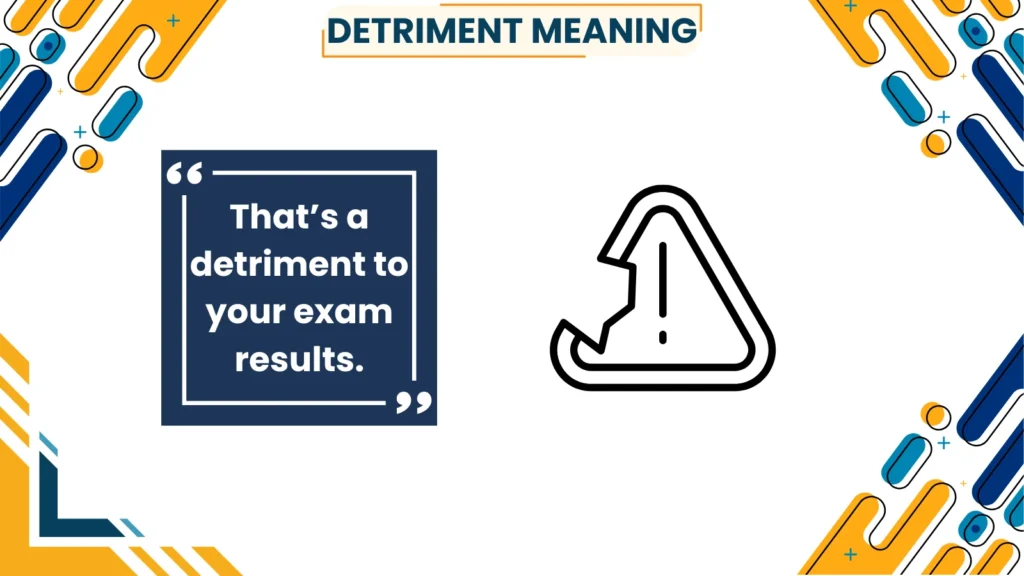
Student 1: “I didn’t revise properly.”
Student 2: “That’s a detriment to your exam results.”
3. Social Media Argument
“Overworking without breaks is a detriment to productivity, not a boost.”
4. Work or Career Context
“Poor communication in teams can be a detriment to project success.”
5. Health & Lifestyle Example
“Skipping meals regularly is a detriment to your overall health.”
Common Mistakes or Misunderstandings
Even though the word is simple, many learners and internet users misuse it. Let’s clear up confusion around detriment meaning.
Mistake 1: Thinking it means “benefit”
❌ Wrong: “Exercise is a detriment to health.”
✔ Correct: Exercise is actually a benefit, not a detriment.
Mistake 2: Using it as a verb
❌ Wrong: “This detrinments my success.”
✔ Correct: “This is a detriment to my success.”
Mistake 3: Overusing it in casual chat
While you can use it in texting, it may sound too formal or serious in very casual conversations.
Example:
- Natural: “That’s bad for your focus”
- Formal: “That’s a detriment to your focus”
Mistake 4: Confusing it with similar words
People often confuse detriment with:
- Damage
- Harm
- Disadvantage
While similar, “detriment” is more formal and abstract.
Related Slangs or Similar Expressions
Although detriment meaning is not slang, here are modern or casual alternatives people use in 2026 chats:
Casual Alternatives
- “bad for”
- “hurts”
- “messing up”
- “not good for”
- “holding back”
Examples:
- “Lack of sleep is bad for your focus.”
- “That habit is messing up your progress.”
More Formal Synonyms
- Harm
- Disadvantage
- Drawback
- Liability
- Impairment
SEO Tip for Writers
If you’re writing content around detriment meaning, always include synonyms to help Google understand semantic relevance.
Why Understanding “Detriment” Matters in 2026 Communication
Language trends in 2026 show a mix of:
- Short slang (like texting abbreviations)
- Formal words used in memes or debates
- Hybrid communication styles
Even though “detriment” is formal, it is still widely used because:
- People want to sound more persuasive online
- Educational content is booming on social media
- AI-generated content and discussions often include formal vocabulary
Understanding it helps you:
- Read complex posts easily
- Improve your writing skills
- Communicate more professionally
- Understand academic or career-related content
Internal Linking Suggestions (For SEO Websites)
If you are publishing this article on a blog, consider linking to:
- “Benefit meaning explained”
- “Disadvantage vs drawback difference”
- “Formal English words used in essays”
- “How to improve vocabulary fast in 2026”
Frequently Asked Questions (FAQs)
1. What is the simple meaning of detriment?
Detriment means something that causes harm, damage, or disadvantage.
2. Is detriment a slang word?
No, it is a formal English word, not slang or a chat abbreviation.
3. How do I use detriment in a sentence?
You can say: “Smoking is a detriment to your health.”
4. What is the synonym of detriment?
Common synonyms include harm, disadvantage, drawback, and damage.
5. Is detriment positive or negative?
It always has a negative meaning.
6. Where is detriment commonly used?
It is used in academic writing, professional communication, and serious online discussions.
7. Can I use detriment in texting?
Yes, but it may sound formal compared to casual alternatives like “bad for.”
8. What is the opposite of detriment?
The opposite would be benefit, advantage, or gain.
Conclusion:
To sum it up, detriment meaning refers to something that causes harm, loss, or a negative impact.
It is not slang or an internet abbreviation but a formal English word widely used in writing, education, and professional communication.
While you may not use “detriment” in everyday texting often, recognizing it will improve your reading comprehension and communication skills across different platforms.
In 2026, understanding words like this helps you navigate both serious and casual online content more effectively.