If you’ve recently come across the term “COCSA” in a message, comment thread, or online discussion and felt confused you’re not alone.
Internet slang evolves fast, and some abbreviations aren’t as obvious as others. Understanding what COCSA meaning is can help you avoid awkward misunderstandings, especially in sensitive conversations.
In today’s digital world, where communication is often shortened into acronyms, knowing the real meaning behind certain terms is more important than ever.
Some abbreviations are harmless, funny, or casual but others, like COCSA, carry serious weight.
This guide is Updated for 2026 and will break everything down in a clear, practical, and human way so you can understand, use (or avoid) this term correctly.
What Does “COCSA” Mean? (Definition & Origin)
COCSA stands for:
Child-On-Child Sexual Abuse
This is not typical internet slang or a casual texting abbreviation. Instead, it’s a serious term used in psychology, education, and safeguarding discussions.
Key Points to Understand
- It refers to sexual behavior or abuse occurring between minors.
- It is commonly used in:
- Educational materials
- Child protection discussions
- Awareness campaigns
- Online forums focused on mental health or trauma
Origin of the Term
Unlike fun abbreviations like “LOL” or “BRB,” COCSA originates from professional and clinical language. Over time, it has made its way into:
- Social media awareness posts
- Support group discussions
- Online educational content
How to Use “COCSA” in Texts or Chat
Here’s the important part:
👉 COCSA is not meant for casual texting or jokes.
It’s used in serious, respectful conversations usually to:
- Raise awareness
- Share educational information
- Discuss sensitive personal experiences
Appropriate Contexts
You might see or use COCSA in:
- Online forums about mental health
- Educational blog posts
- Advocacy campaigns
- Professional discussions (teachers, counselors, psychologists)
Example of Proper Usage
- “Schools need better awareness programs about COCSA meaning and prevention.”
- “I read an article explaining how COCSA affects long-term mental health.”
When NOT to Use It
Avoid using this term:
- In jokes or memes ❌
- In casual chats ❌
- Without understanding its meaning ❌
Examples of “COCSA” in Conversations
To help you understand how this term appears in real-life contexts, here are some realistic examples:
1. Educational Discussion
“Many people don’t understand the difference between peer behavior and COCSA.”
2. Awareness Post
“Raising awareness about COCSA meaning is crucial for protecting children.”
3. Support Forum
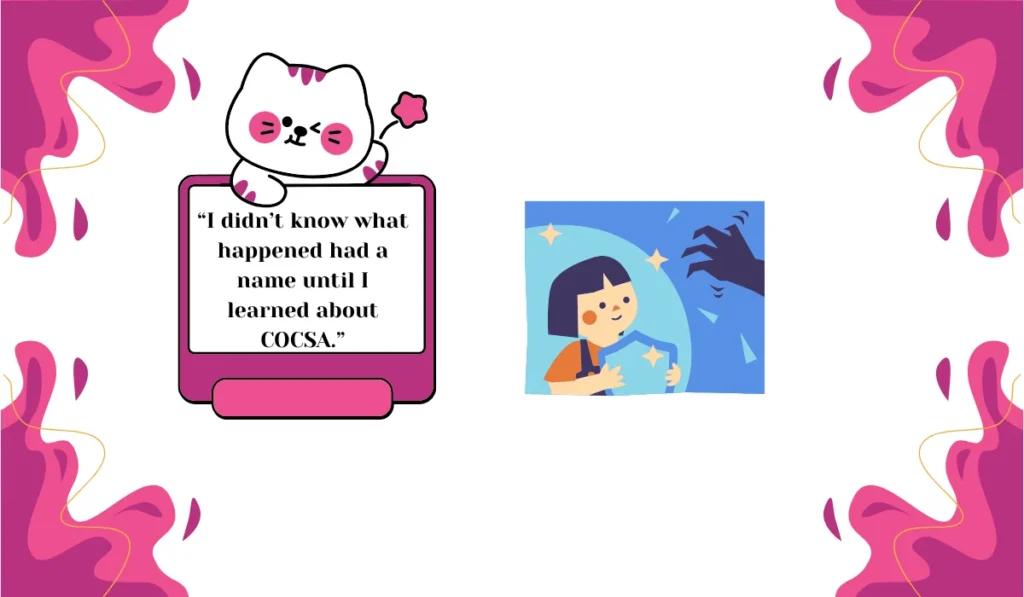
“I didn’t know what happened had a name until I learned about COCSA.”
4. Social Media Thread (2026 Style)
“Thread 🧵: Important info parents need to know about COCSA meaning and early signs.”
Common Mistakes or Misunderstandings
Because the abbreviation looks like typical internet slang, people often misunderstand it.
Mistake #1: Thinking It’s Casual Slang
Some assume COCSA is similar to:
- LOL
- IDK
- SMH
👉 It’s not. It’s a serious term.
Mistake #2: Using It Without Context
Dropping COCSA into random conversations can:
- Confuse people
- Come across as insensitive
Mistake #3: Misinterpreting the Meaning
Some users guess incorrect meanings like:
- “Cool Online Chat Social App” ❌
- “Crazy Online Content Sharing Area” ❌
👉 Always verify before using unfamiliar abbreviations.
Related Slangs or Abbreviations
Although COCSA is not casual slang, it may appear alongside other terms in similar discussions.
Related Serious Terms
- CSA – Child Sexual Abuse
- SA – Sexual Abuse
- MH – Mental Health
- TW – Trigger Warning
Common Internet Slang (Different Category)
For comparison, here are typical casual abbreviations:
- LOL – Laugh Out Loud
- IMO – In My Opinion
- DM – Direct Message
👉 These are safe for everyday use, unlike COCSA.
When and Where You Might See “COCSA Meaning” Online
Understanding where this term appears can help you interpret it correctly.
Common Platforms
- Reddit discussions (mental health threads)
- Twitter/X awareness posts
- YouTube educational videos
- Blogs about parenting or psychology
Real-Life Scenario (Relatable Example)
Imagine scrolling through social media and seeing:
“Parents, please educate yourselves about COCSA meaning. Early awareness matters.”
If you didn’t know the term, you might ignore it—or misunderstand it. Now, you know it’s something important, not casual.
Why Understanding “COCSA Meaning” Matters
This isn’t just about knowing another acronym.
Understanding COCSA meaning helps you:
- Stay informed about important social issues
- Respond appropriately in serious discussions
- Avoid accidental insensitivity
- Recognize educational or awareness content
Practical Tips for Using or Responding to “COCSA”
If You See It in a Conversation
- Take it seriously
- Read the context carefully
- Avoid joking or dismissive replies
If You Need to Use It
Use it only when:
- Sharing educational information
- Discussing awareness topics
- Engaging in respectful conversations
Safe Response Examples
- “Thanks for sharing this information about COCSA meaning.”
- “This is an important topic more people should understand.”
Internal Linking Suggestions (For SEO Content Strategy)
If you’re publishing this article, consider linking to:
- “What Does SA Mean in Text?”
- “TW Meaning in Social Media”
- “Common Internet Slang Explained”
- “DM Meaning in Chat”
This helps improve SEO and keeps readers engaged.
FAQs
1. What does COCSA mean in texting?
COCSA stands for Child-On-Child Sexual Abuse. It is not casual slang and is used in serious contexts.
2. Is COCSA a common internet abbreviation?
No, it’s not common slang. It’s primarily used in educational and awareness discussions.
3. Can I use COCSA in casual chat?
No. It’s a sensitive term and should only be used in appropriate, respectful contexts.
4. Why do people use COCSA instead of writing it fully?
To keep discussions concise while still addressing a serious topic clearly.
5. Where is COCSA most commonly used?
You’ll see it in:
- Educational content
- Awareness campaigns
- Mental health forums
6. Is COCSA the same as CSA?
Not exactly.
- CSA is broader (Child Sexual Abuse)
- COCSA specifically refers to abuse between minors
7. What should I do if I see COCSA in a post?
Take it seriously, read the context, and respond respectfully if needed.
8. Why is understanding COCSA important in 2026?
Because awareness around child safety and mental health is increasing, and accurate understanding helps promote responsible conversations.
Conclusion
Understanding the COCSA meaning is essential not because it’s trendy slang, but because it represents a serious and important topic.
Unlike everyday abbreviations, this term requires awareness, sensitivity, and proper context.
In today’s fast-moving digital world, it’s easy to assume every acronym is casual but COCSA is different. Knowing its meaning helps you:
- Avoid misunderstandings
- Engage responsibly in discussions
- Recognize important awareness content
As online conversations continue to evolve in 2026, being informed isn’t just helpful—it’s necessary.
👉 Now it’s your turn: Have you come across any confusing text abbreviations lately?
Share your favorite (or most confusing) text abbreviation in the comments!