If you’ve recently come across the term “federalism” in a text, meme, comment thread, or even a casual chat, you might have paused and thought wait,
isn’t that a political term?
You’re absolutely right.
Unlike typical internet slang (like “LOL” or “BRB”), federalism isn’t originally a texting abbreviation.
So why does understanding the federalism meaning matter in chat culture?
- Social media discussions now blend education + entertainment
- Political awareness is trending on platforms like TikTok and X (Twitter)
- Academic terms are being used in simplified, meme-worthy ways
This guide breaks it all down in a simple, conversational, and practical way, so you can confidently understand and even use federalism in your own chats.
What Does “Federalism” Mean? (Definition & Origin)
Simple Definition of Federalism
Federalism is a system of government where power is divided between:
- A central (national) government
- Smaller regional governments (like states or provinces)
👉 In simple words:
Federalism means sharing power between a big authority and smaller local authorities.
Example to Make It Easy
Think of it like a group project:
- The team leader = central government
- The team members = state governments
Everyone has their own responsibilities, but they still work together.
Origin of the Word
The term federalism comes from the Latin word foedus, meaning:
“agreement” or “treaty”
That makes sense, right? Because federalism is basically an agreement on how power is shared.
Where You Usually Hear It
Traditionally, federalism is used in:
- Politics and government discussions
- School textbooks (especially civics or political science)
- News debates
But now, it’s slowly entering online conversations and informal chats too.
How to Use “Federalism” in Texts or Chat
Now here’s the interesting part: people don’t use “federalism” like slang, but they do use it in casual, simplified ways sometimes even humorously.
Common Contexts Where It Appears
- Academic Chats
- Students discussing homework or exams
- Example:
“Bro, can you explain federalism meaning in 2 lines?”
- Political Discussions Online
- Debates in comment sections
- Example:
“This policy actually supports federalism, not central control.”
- Memes & Humor
- Turning serious terms into jokes
- Example:
“My family runs on federalism mom has power, but dad thinks he does.” 😂
- Simplified Explanations in DMs
- Explaining concepts quickly
- Example:
“Federalism = sharing power between national & state governments. Easy.”
Pro Tip for Chat Usage
If you want to sound clear and smart (not confusing), keep it simple:
✅ Good:
- “Federalism means power is shared between central and state governments.”
❌ Avoid:
- Overcomplicated textbook definitions in casual chats
Examples of “Federalism” in Conversations
Let’s make it real with modern, relatable chat examples 👇
1. Student Chat Example
A: “What’s federalism meaning? I don’t get it 😭”
B: “It’s just power divided between national and state governments.”
2. Social Media Comment
“People arguing about policies without understanding federalism is wild 💀”
3. Funny Group Chat
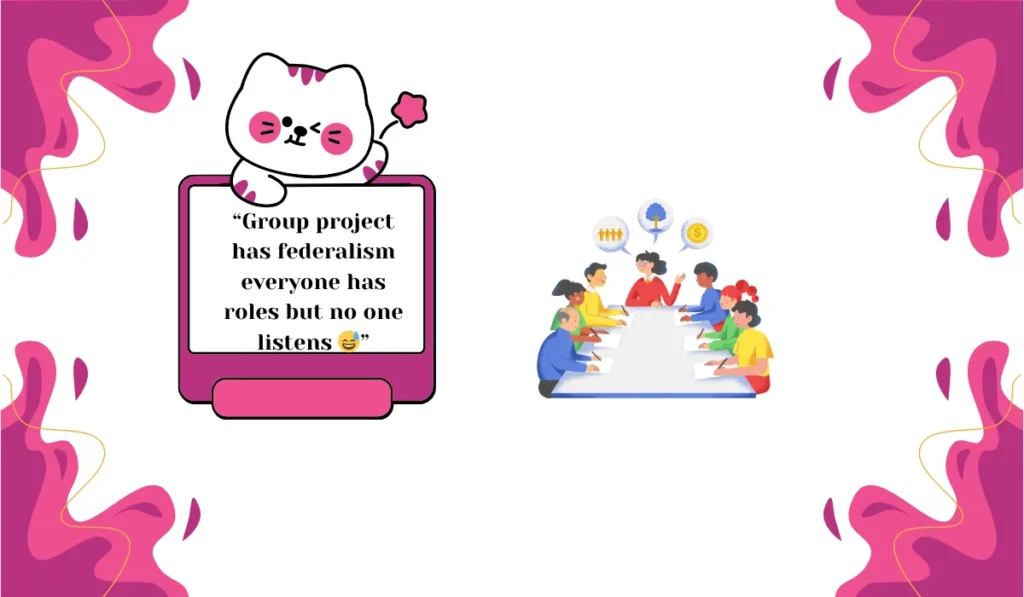
“Group project has federalism everyone has roles but no one listens 😅”
4. Debate Style Chat
“This issue should be handled by states. That’s literally what federalism is about.”
5. Meme Caption
“Federalism in theory vs reality”
(Image shows chaos vs organization 😂)
Common Mistakes or Misunderstandings
Even though the federalism meaning is straightforward, people often get it wrong—especially in casual conversations.
Mistake #1: Thinking It Means “Government Control” Only
❌ Wrong: “Federalism means the central government controls everything.”
✅ Correct:
It actually means power is shared, not controlled by one side.
Mistake #2: Confusing It with Democracy
- Democracy = people choose leaders
- Federalism = power is divided between levels of government
👉 They’re related but NOT the same.
Mistake #3: Using It Randomly in Chat
Sometimes people drop “federalism” just to sound smart—even when it doesn’t fit.
Example:
❌ “I love pizza, it’s federalism” (makes zero sense)
Mistake #4: Overcomplicating the Definition
You don’t need to write a full paragraph in chats.
Keep it short and clear.
Related Slangs or Abbreviations
Even though federalism isn’t slang, it often appears alongside other modern chat terms.
Common Related Terms
- Gov – Short for government
- PoliSci – Political Science
- DM – Direct Message
- IMO – In My Opinion
- FYI – For Your Information
Trending Internet-Style Usage
- “FYI, that’s not federalism, that’s centralization.”
- “IMO, people should learn federalism basics before arguing online.”
Internal Linking Suggestions (For Your Blog)
To boost SEO, link this article with:
- “Democracy Meaning in Text”
- “Constitution Meaning Explained”
- “What Does Government Mean in Chat?”
- “Centralization vs Decentralization (Simple Guide)”
Why “Federalism Meaning” Is Trending Online in 2026
Let’s be real this isn’t random.
Here’s why more people are searching for federalism meaning:
1. Rise of Political Awareness
Young users are more informed and curious than ever.
2. Education Meets Social Media
Platforms like TikTok are simplifying complex topics into:
- 30-second explainer videos
- Meme-based learning
3. Exams & Quick Learning
Students prefer quick, chat-friendly explanations instead of long textbook definitions.
4. Debate Culture Online
People love discussing:
- Policies
- Governance
- Rights
And federalism often comes up in those debates.
How to Use “Federalism” Correctly (Practical Tips)
If you want to use the term naturally in chats or posts, follow these tips:
Keep It Simple
- “Federalism = shared power between central & state governments”
Use It in Relevant Contexts
✔ Politics
✔ Education
✔ Discussions
✔ Debates
Add Examples When Explaining
Example:
“Like in many countries, states have their own rules—that’s federalism.”
Don’t Force It
If it doesn’t fit the conversation, skip it.
FAQs
1. What is the simple meaning of federalism?
Federalism means power is divided between a central government and smaller regional governments.
2. Is federalism a slang term?
No, it’s a political concept, but it’s now used casually in online conversations.
3. How is federalism used in texting?
Usually in educational or discussion-based chats, not as a casual abbreviation.
4. Can I use federalism in memes?
Yes! Many people use it humorously to describe shared responsibility situations.
5. What’s the difference between federalism and centralization?
- Federalism = shared power
- Centralization = power stays with one central authority
6. Why is federalism trending online?
Because of increased political awareness, student discussions, and educational content on social media.
7. Is federalism important for exams?
Absolutely. It’s a key concept in political science and civics.
8. Can I explain federalism in one line?
Yes:
👉 “Federalism means sharing power between national and state governments.”
Conclusion:
So, what’s the takeaway?
The federalism meaning is simple at its core:
👉 It’s all about sharing power between different levels of government.
While it’s not traditional internet slang, its growing presence in chats, memes, and online discussions shows how education and digital culture are blending in 2026.
Whether you’re a student, content creator, or just someone curious about trending terms, understanding federalism helps you:
- Join smarter conversations
- Avoid misunderstandings
- Explain complex ideas in a simple way
Your Turn!
Have you seen federalism used in a funny or interesting way online?
💬 Share your favorite text abbreviation or example in the comments!