Understanding usury meaning is important not because it’s internet slang or a chat abbreviation but because it’s a powerful financial and legal term that still affects loans, banking, and personal finance conversations today in 2026.
If you came here thinking “usury” is something people type in texts or social media chats, don’t worry you’re not alone.
Many modern readers confuse uncommon English terms with slang.
However, usury is actually a traditional financial concept, and knowing it can help you better understand loans, interest rates, and even legal discussions online.
In this guide, we’ll break down everything in a simple, human way so you can confidently understand and use the term in real life.
What Does “Usury Meaning” Mean? (Definition & Origin)
The usury meaning refers to:
The practice of charging excessively high or illegal interest rates on loans.
In simple terms, usury happens when someone lends money and charges unfair or exploitatively high interest especially beyond what is legally allowed.
📜 Origin of the Word “Usury”
The word usury comes from the Latin word “usura”, which means interest or use. Historically, it referred to any kind of interest charged on borrowed money.
Over time, especially in medieval Europe, charging interest was often considered morally wrong or even illegal in some societies. Eventually, the meaning evolved to specifically refer to unreasonably high or exploitative interest rates, rather than normal banking interest.
💡 Modern Meaning (2026 Context)
Today, in 2026, usury is generally understood as:
- Charging illegal interest rates
- Taking advantage of borrowers
- Loan practices that violate financial laws
So, while banks charge regulated interest, usury refers to abusive lending practices.
Is “Usury” a Chat or Internet Slang?
Let’s clear a common confusion:
❌ Usury is NOT internet slang
❌ It is NOT a texting abbreviation
✔ It is a formal financial/legal term
Unlike terms like “LOL,” “BRB,” or “ICYMI,” usury is used in legal documents, economics, and finance discussions not casual texting.
So if you saw it online, it likely appeared in:
- Financial news articles
- Law-related discussions
- Educational content about loans
- Banking or credit topics
How Is “Usury” Used in Real Life Conversations?
Even though it’s not slang, you may still encounter usury meaning in real-world conversations, especially in serious or educational contexts.
Here’s how it might appear:
🏦 Banking & Finance Discussions
People use it when talking about loan ethics:
“That lender is charging such high interest, it feels like usury.”
⚖️ Legal Context
Lawyers or courts may use it:
“The contract was declared invalid due to usurious interest rates.”
📚 Academic or Economic Writing
Economists or students may write:
“Usury laws were introduced to prevent exploitation of borrowers.”
Examples of “Usury” in Conversations
Let’s make it even easier with real-style examples:
💬 Example 1: Everyday Explanation
A friend might say:
“Be careful with that loan app—it looks like usury.”
Meaning: The interest rate seems unfair or too high.
💬 Example 2: Social Media Discussion
On a finance forum:
“These payday loans are basically modern usury.”
Meaning: They charge extremely high interest rates.
💬 Example 3: Academic Use
In a classroom discussion:
“Historically, many religions condemned usury.”
Meaning: Charging interest was once considered unethical.
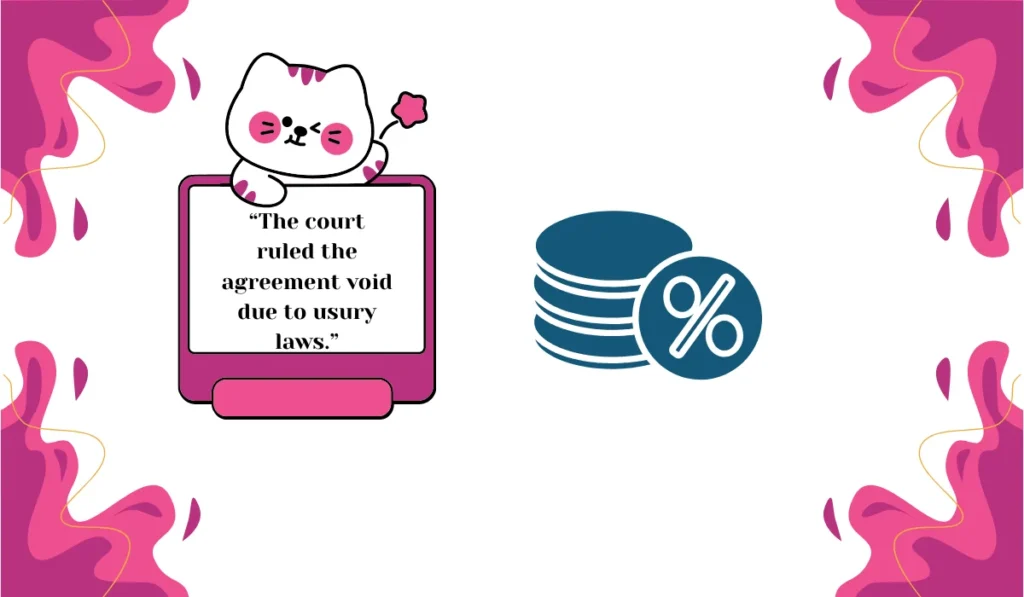
💬 Example 4: Legal Context
“The court ruled the agreement void due to usury laws.”
Meaning: The interest rate broke legal limits.
Common Mistakes or Misunderstandings About Usury
Many people misunderstand usury meaning, especially online. Here are the most common mistakes:
❌ Mistake 1: Thinking It Means Any Interest
Not all interest is usury. Normal bank interest is legal and regulated.
👉 Usury only refers to excessive or illegal interest
❌ Mistake 2: Confusing It with Slang
Some assume it’s modern internet slang. It’s not used in texting culture.
❌ Mistake 3: Thinking It’s Always Illegal Everywhere
Usury laws vary by country. What is “too high” in one place may be legal in another.
❌ Mistake 4: Mixing It with “Loan Interest”
Interest is normal in banking. Usury is abusive interest.
Related Terms & Similar Financial Words
To fully understand usury meaning, here are related concepts you should know:
💰 Interest Rate
The percentage charged for borrowing money.
📊 APR (Annual Percentage Rate)
The yearly cost of borrowing, including fees and interest.
🧾 Loan Sharking
Illegal lending with extremely high interest rates—very similar to usury in practice.
⚖️ Usury Laws
Government rules that limit how much interest lenders can charge.
🕌 Riba (in Islamic Finance)
A term used in Islamic economics referring to prohibited interest.
Where You Might See “Usury Meaning” Online (2026 Trends)
Even in 2026, the term appears in:
- Finance blogs explaining loans
- TikTok or YouTube financial education videos
- Reddit discussions about debt traps
- News about lending regulations
- Online banking safety guides
Example modern usage:
“This app’s loan structure feels like digital usury—be careful.”
How to Use “Usury” Correctly
If you ever need to use the word, here’s how to do it properly:
✔ Correct Usage Contexts:
- Legal discussions
- Financial education
- Academic writing
- Economic analysis
❌ Avoid Using It In:
- Casual texting
- Emoji chats
- Social slang conversations
- Memes (usually incorrect context)
Why Understanding Usury Matters Today
Even though it’s not slang, knowing usury meaning helps you:
- Avoid unfair loan schemes
- Understand financial news better
- Recognize exploitative lending practices
- Make smarter borrowing decisions
- Protect yourself from debt traps
In a world where online lending apps and digital credit are growing fast, this knowledge is more useful than ever in 2026.
FAQs
1. What is the simple meaning of usury?
Usury means charging extremely high or illegal interest on loans, often considered unfair or exploitative.
2. Is usury the same as interest?
No. Interest is a normal banking charge, while usury refers to excessive or illegal interest rates.
3. Is usury a slang word?
No, usury is not slang. It is a formal financial and legal term.
4. Is usury illegal?
In many countries, yes charging interest above legal limits is considered usury and is illegal.
5. Where is usury commonly used?
It is used in law, finance, economics, and academic discussions.
6. What is an example of usury?
A loan with extremely high interest, such as 50% monthly charges, may be considered usury.
7. What is the difference between usury and loan sharking?
Loan sharking is illegal lending activity, while usury refers specifically to excessive interest rates (often part of loan sharking).
8. Why is usury important to understand?
It helps people recognize unfair lending practices and avoid financial exploitation.
Conclusion
The usury meaning is not related to texting slang or internet abbreviations it is a serious financial concept that describes unfair or illegal interest charges on loans.
Understanding it helps you make smarter financial decisions and avoid exploitative lending practices.
While it may sound like a complex legal term, it’s actually very simple once broken down:
usury is just charging too much interest, often beyond legal or ethical limits.
In 2026, with digital loans and online credit systems expanding rapidly, this knowledge is more useful than ever.
If you found this guide helpful, feel free to explore other finance and language explanations or share your favorite confusing word or abbreviation in the comments!